


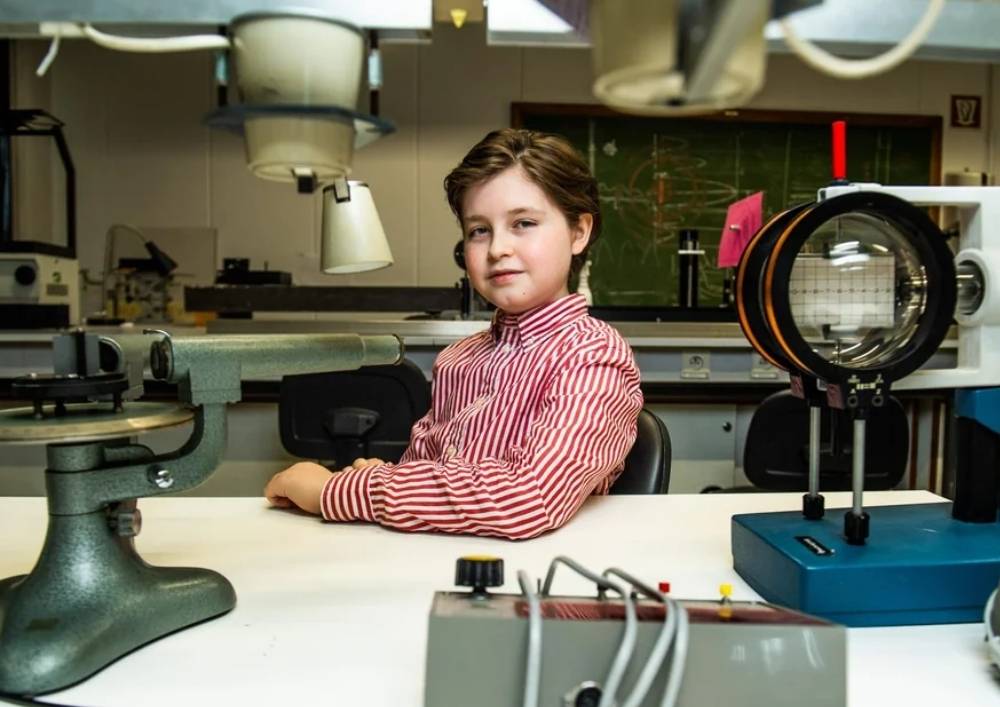
BELGIUM – In a development drawing global attention, 15-year-old prodigy Laurent Simons has officially secured his doctorate in quantum physics from the University of Antwerp, making him one of the youngest individuals in history to achieve such a milestone. His accomplishment has sparked both admiration and debate within academic circles, raising questions about extraordinary talent, early education, and the pressures young prodigies face.
– According to the university, Simons successfully defended his thesis on November 24, 2025, marking the latest achievement in a record-breaking academic journey that saw him complete high school at 8, a bachelor’s degree at 12, and a master’s degree shortly thereafter.
Simons stated after his defense that earning a PhD is “just the beginning” and shared that he now plans to pursue advanced studies in the medical sciences and artificial intelligence, aiming to work toward what he describes as “creating super-humans.”
A Rapid Ascent Through Academia
From finishing primary school at six to achieving a PhD at 15, Simons’ educational trajectory defies conventional academic timelines. He reportedly completed his three-year bachelor’s curriculum in just 18 months and went on to finish a master’s degree at remarkable speed before moving on to doctoral research.
His PhD focused on advanced quantum mechanics, particularly “boson polarons in superfluids and supersolids,” a subject that challenges even mature researchers.
What This Means for the Scientific Community
Many experts have called Simons’ accomplishment a landmark moment that challenges long-held assumptions about age, intellectual capacity, and educational progression. His early specialization and accelerated learning path could reshape how institutions approach gifted education and interdisciplinary research.
His planned shift toward biomedical science and AI hints at emerging scientific frontiers where physics merges with healthcare, potentially influencing breakthroughs in longevity, medical innovation, and computational technologies.
Concerns and Criticism
However, Simons’ academic sprint has also triggered concerns. Educationists and psychologists caution that such acceleration may limit social and emotional development, raising questions about whether prodigies can truly gain the balanced experiences that childhood and adolescence typically offer. Critics have also questioned the intense pressure such children may face—from institutions, the media, and even family expectations.
What Lies Ahead
Simons is already preparing for another doctoral path, this time in medical science with a focus on artificial intelligence. His ambition and trajectory are expected to continue shaping discussions around gifted children, academic acceleration, and the evolving nature of scientific research.
For now, Laurent Simons’ record-making achievement stands as both a celebration of extraordinary talent and a catalyst for deeper debate around how society nurtures exceptional young minds.
This story has been reported by PakTribune. All rights reserved.